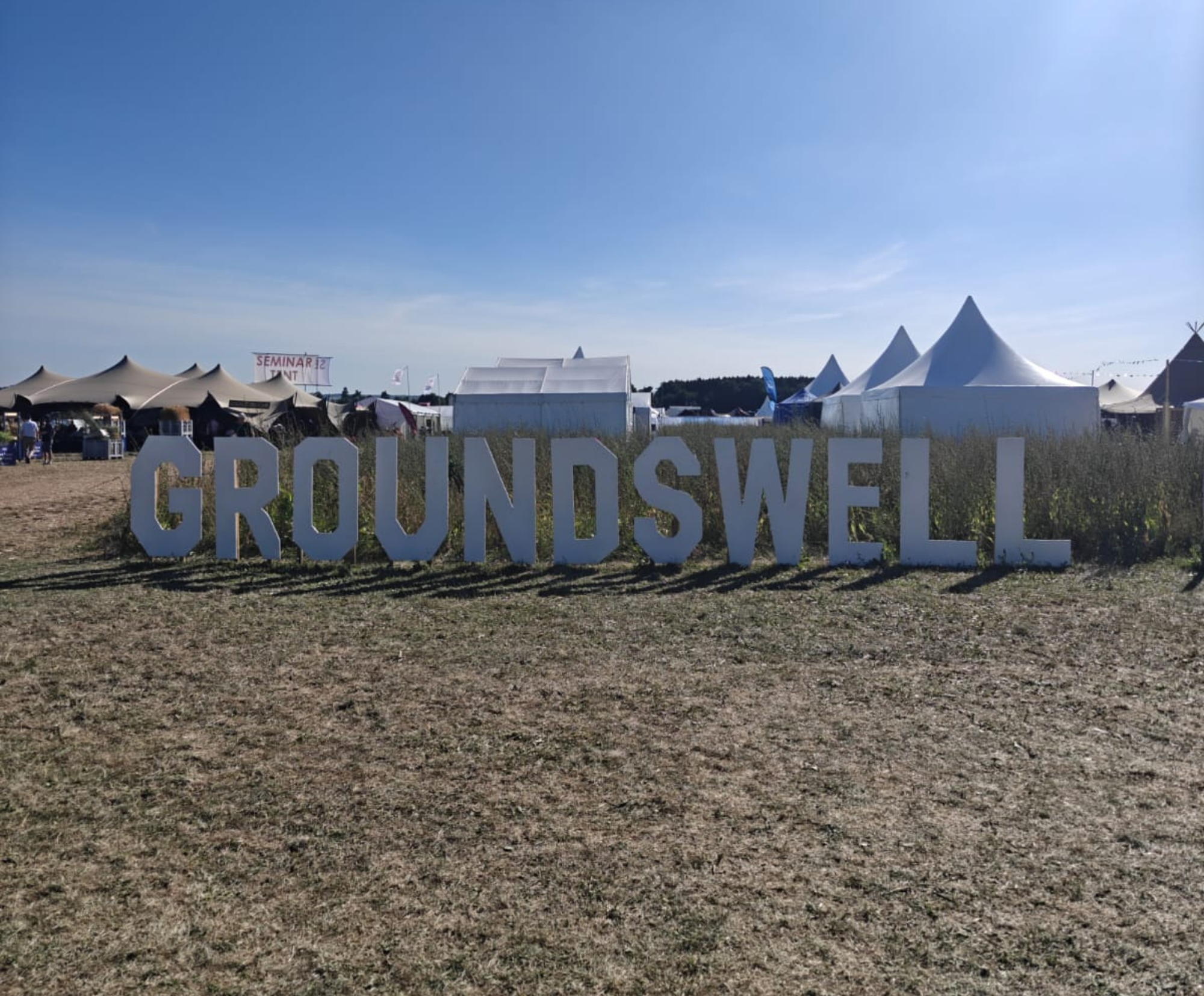
This July marked 10 years of Groundswell; the regenerative farming conference-come-festival. Our Land Use Plus team were in attendance, here are their reflections from the summer’s hottest regen event.
If there was one feeling running through every conversation at this year’s Groundswell it was a hope that the UK is standing on the edge of a food systems shift. However, making the transition requires working together, pushing the boundaries, and transparency; all things that our current food system is built to avoid.
Connection: The power of sharing
One of Groundswell’s greatest strengths is that it creates opportunities for cross-sector discussion; growers, nutritionists, policy makers, advisors, farmers, academics and more come together to share and learn from each other. The Welsh Veg in Schools programme is a brilliant example of what happens when procurement, growers and public institutions talk to each other; 100 tonnes of local organic produce feeding 600 schools, and a supply chain that strengthens both children’s health and farmer livelihoods.
This theme kept resurfacing: when knowledge is pooled rather than protected, food systems become resilient. Whether it’s farmers sharing pulse‑growing tips or schools reclaiming control through in‑house catering, collaboration supports change. A quote from Westmorelands – the service station company championing local food in 3 (soon to be four) locations across the UK – stood out “You grow, we grow.” This is their founding ethos; guiding them to support small businesses to find new audiences. In one particularly inspiring session, landowner Tom Pearson spoke about how welcoming market gardener Adrienne Gordon onto his farm had created community and growth as well as enhancing spaces for nature.
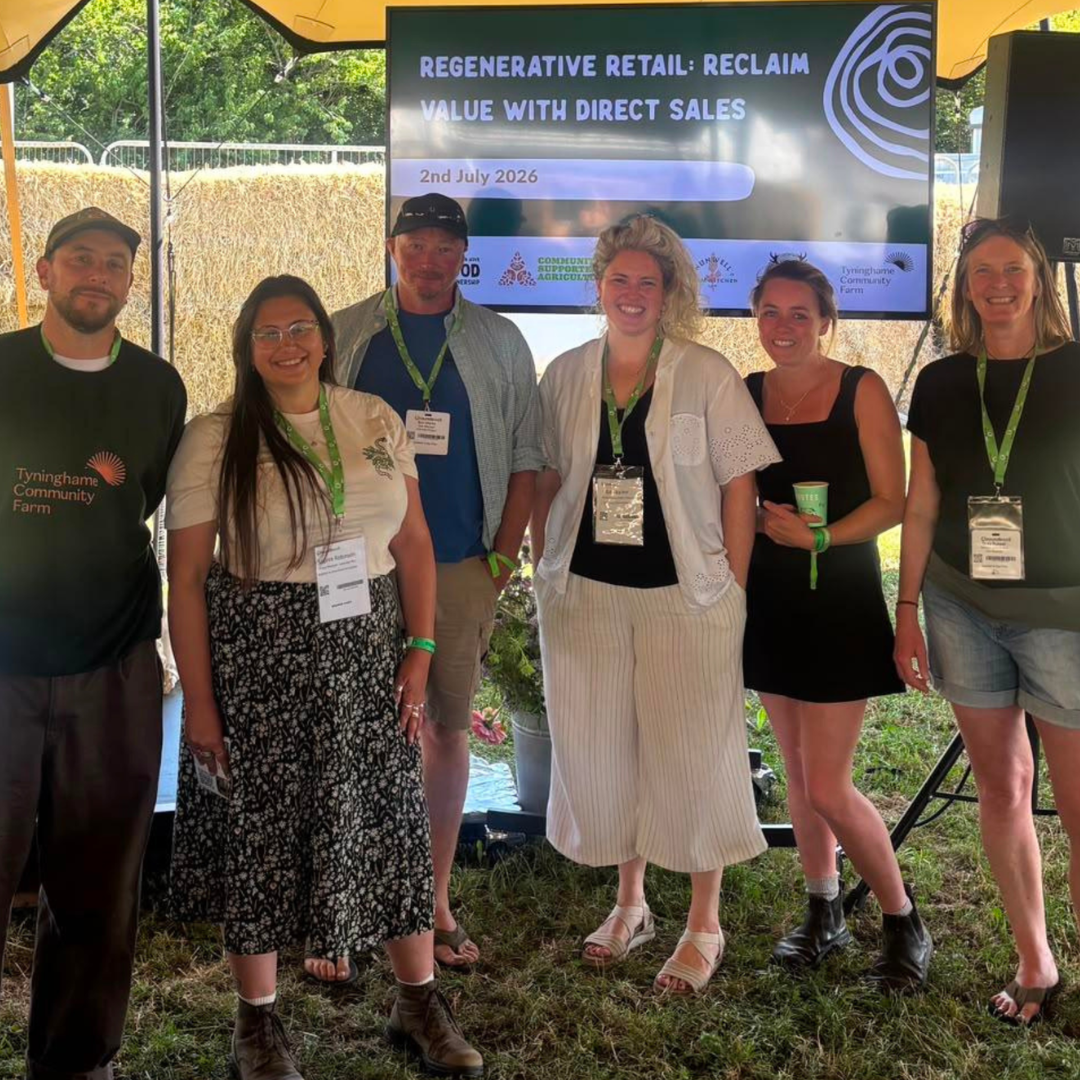
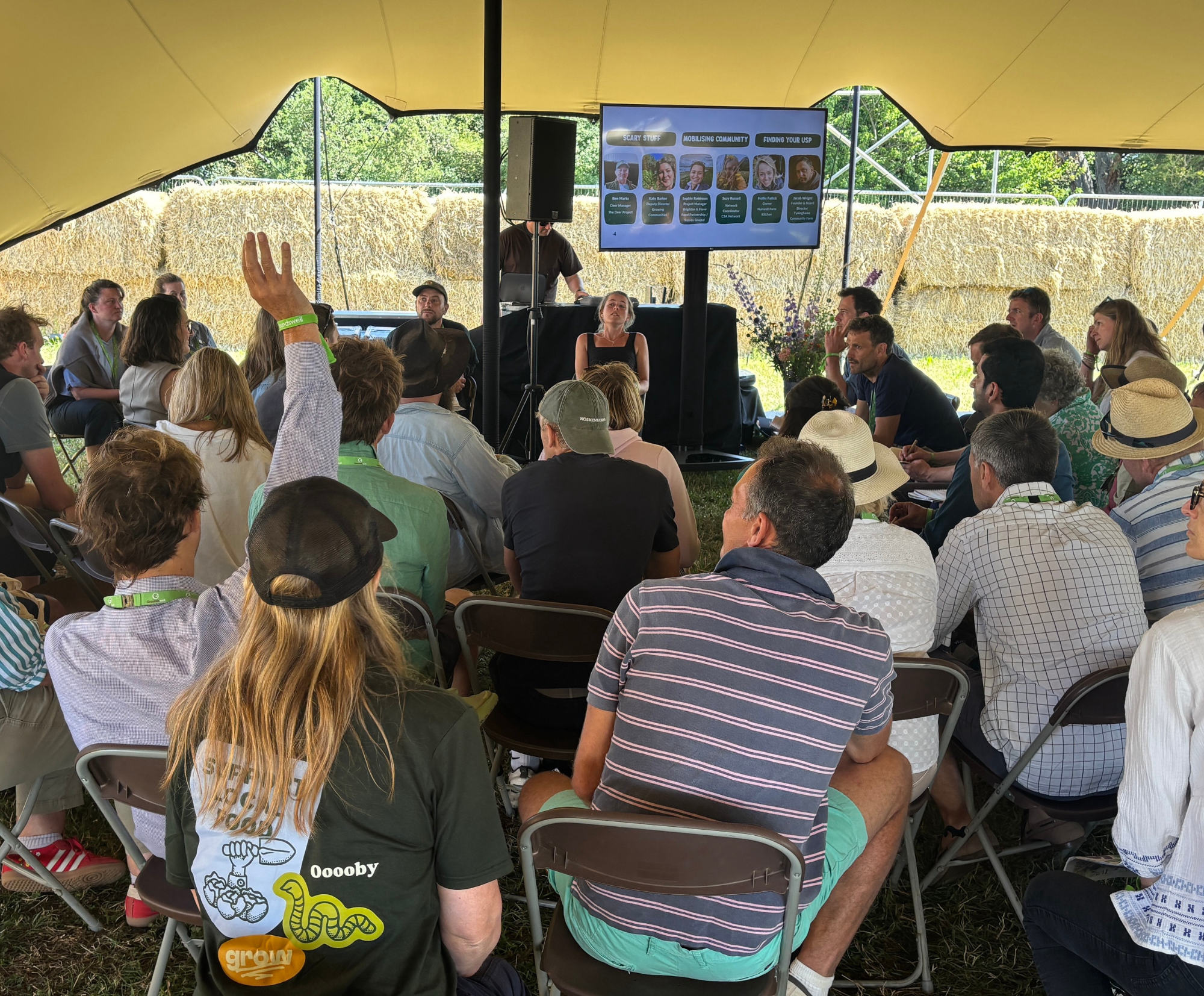
The Land Use Plus team set out to do just that: create a space to share, giving new regenerative food entrepreneurs the chance to learn directly from those who’ve already walked the path. Leading the session were representatives from the CSA Network and Growing Communities, alongside the founders of Nunwell Farm Kitchen, Tyninghame Community Farm and The Deer Project. These experts shared hard‑won lessons on everything from legal hurdles to building identity and community trust. Across two sessions, participants asked questions, swapped stories and gathered the kind of practical advice you can’t find in a handbook. Both attendees and panelists left buzzing with ideas and genuinely inspired.
Courage: A Food System That Dares to Evolve
Protein is always a hot topic at farming events. The UK has the climate, the growers and the momentum to greatly increase our pulse production; but doing so would require courage. Policymakers could make a shift to highlight the value of legumes for human consumption, not simply soil health, and to support the improved infrastructure to make this possible. High end restaurants are in a position to elevate beans from a cheap staple or veggie necessity to a gourmet ingredient. Producers should experiment with new (or more accurately, old) varieties.
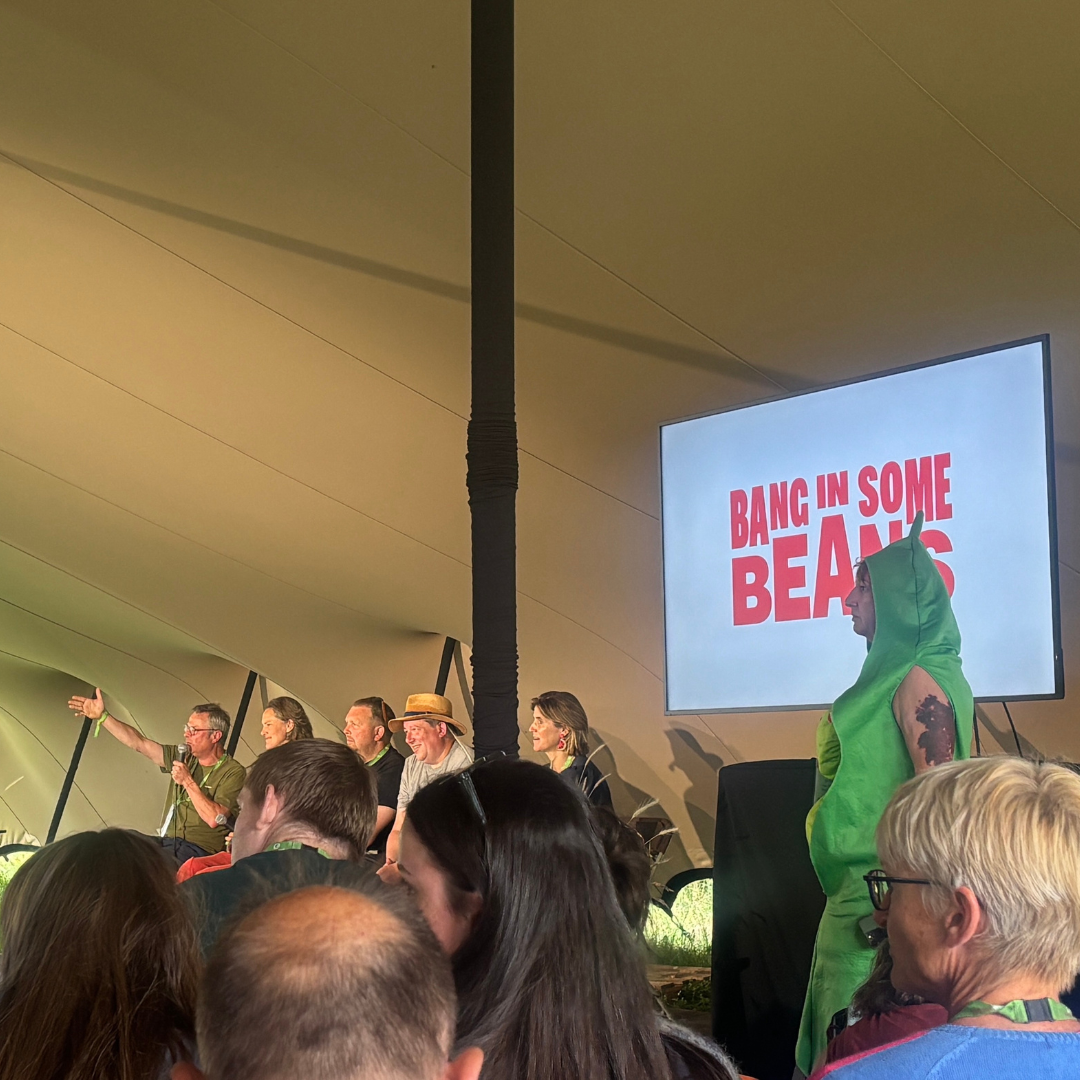
This same courage is needed in school food. New standards are pushing for more wholegrains, vegetables and pulses, but without changes to procurement practices and investment in kitchen skills, those ambitions cannot be reached. Courage also means confronting consumer confusion around organic pricing (it’s not always as high as you think!) and demanding transparency from caterers and supermarkets. In regenerative agriculture, courage means admitting that productivity alone can’t define farming anymore. Water security, soil health and climate resilience must sit at the center; something we must work together on to help the public, and policy makers, to understand.
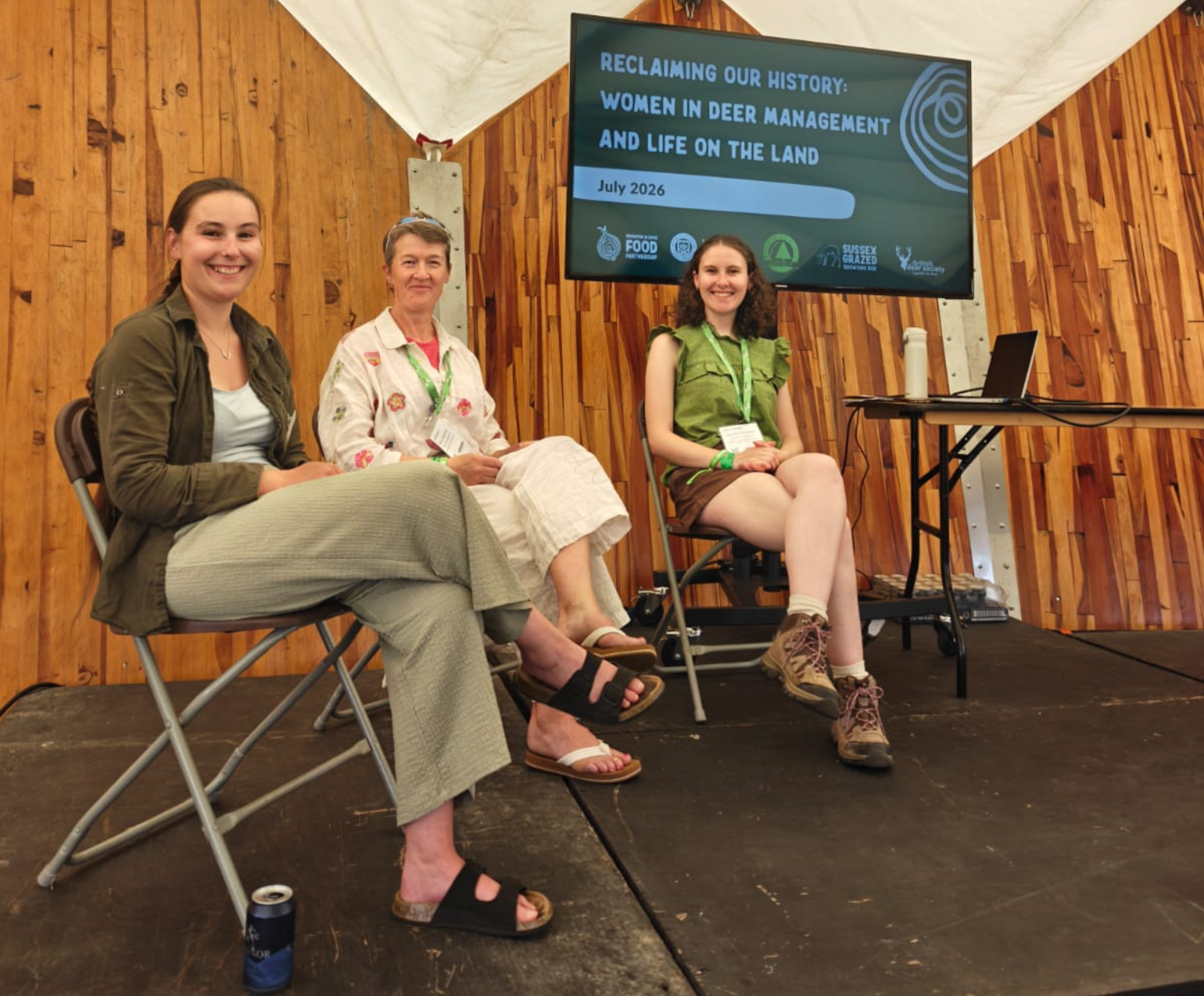
Our own session, Reclaiming our history: Women in deer management and life on the land, featured women making a difference in an industry which is usually seen to be very male dominated. Project Co-Ordinator and panel chair Georgina Cockett shares her reflection on the panel:
“Around 40 people gathered in the intimate Teapot venue, creating a welcoming atmosphere for an engaging discussion. Having worked alongside female deer managers and the women who shape and hold many important positions across the wider venison sector over the past few years, I’ve been inspired by their stories. I wanted to explore the history of women on the land, celebrate their role today, and look to the future. The audience asked thoughtful questions that sparked meaningful conversations, and I hope people left feeling inspired. It also felt significant that our panel was made up entirely of women, while the following day’s venison panel was all male, highlighting why these conversations remain so important.”
Clarity: What is regenerative, anyway?
The food sector is wrestling with slippery language, especially around “regenerative.” Without a clear definition, strong research, and honest communication, we are already seeing the term becoming a marketing tool rather than a meaningful shift in practice. Overuse of the term can take away from and minimise the importance and impact of farming “as it should be”.
The “regenerative KitKat” debate captured this perfectly. If ingredients are grown regeneratively, does that make the final product regenerative? And if so, where does that logic end? One panelist quipped that it would be possible to produce a “regenerative cigarette”. This conversation reveals a deeper need: clarity about responsibility, transparency, and on what consumers are being asked to believe.
Clarity also matters in the supermarket aisle. Fake farm names erode trust, long ingredient lists hide the story of how food is produced and, without clear baselines, schools and caterers can’t measure progress or make informed choices.
Our takeaways
Threaded through every theme was a plea for long‑term policy certainty. Farmers can’t invest in regenerative practices if political priorities shift every two years. Schools can’t redesign procurement without stable funding. Producers can’t build infrastructure if incentives change overnight. Cross-party agreement on food and climate policy isn’t just desirable; it is essential for national food security.
The UK’s food future won’t be shaped by one sector, one policy or one innovation. It will be shaped by how well we connect the dots: growers to schools, farmers to supermarkets, research to practice, children to the food on their plates. This is not easy or simple work, and it will depend upon rethinking how and what we grow, eat and value at both a nationwide and local level. Events like Groundswell give us the space to begin this process and, hopefully, make lasting change to a system which is broken by design.