

As we become more aware of the environmental impact of our food choices, many of us are looking for simple ways to live more sustainably. The good news? One of the easiest changes we can make is to eat with the seasons. Read on for more inspiration and check out our handy guide to seasonal Sussex produce.
There is no better example of the benefits of eating seasonally than the strawberry: Sitting in the park on a summer afternoon with a punnet of strawberries from a local grower warming in the sun; they’ve never tasted better. Bite into a strawberry in the depths of winter, however, and the hydroponic growing methods and huge distance travelled are immediately evident in one disappointing mouthful.
In Sussex, we’re fortunate to have a wonderful variety of fresh produce available throughout the year, grown with love by local producers. Tracking it down can sometimes feel difficult but, when you find it, you enjoy tastier food, support local farmers, and reduce your impact on the planet.
What does eating seasonally mean?
Seasonal eating is exactly what it sounds like: choosing foods at the point of harvest throughout the year. Instead of expecting every fruit and vegetable to be available all year round, seasonal eating encourages us to enjoy produce when it is at its very best.
Think crisp asparagus in spring, vibrant berries in summer, apples and pumpkins in autumn, and hearty root vegetables in winter. Every season brings something new to the table, making meals more varied and exciting. There is also the benefit of cost: when a food is in a “glut” (readily available) it is often significantly cheaper than when out of season.

Better for the planet, better for your plate
One of the biggest benefits of seasonal eating is its positive environmental impact.
When food is grown in line with nature’s rhythms, farmers often need fewer resources to produce it. There is less need for heated greenhouses, artificial lighting, or long-distance transportation. This helps reduce carbon emissions and lowers the overall environmental footprint of our food.
But sustainability isn’t the only advantage. Seasonal produce is often fresher, more flavourful, and packed with nutrients because it hasn’t spent weeks travelling through supply chains before reaching the supermarket shelf.
Supporting local farmers and communities

Choosing seasonal produce is also a great way to support British farmers.
Agriculture in the UK faces a range of challenges, from rising costs to unpredictable weather patterns, as we’ve all seen this summer. These extreme weather events can damage crops, delay planting and harvesting, and significantly reduce yields, creating both financial and operational pressures for farming businesses.
Many farmers are working tirelessly to adapt to a changing climate while continuing to provide high-quality produce for our tables. By choosing locally grown, seasonal food, consumers can play a small but meaningful role in supporting these efforts. Every purchase helps strengthen the resilience of local food systems and ensures that farming communities can continue to thrive despite growing environmental challenges.
Supporting local agriculture isn’t just about protecting livelihoods today. It’s about investing in the future of food security, sustainability, and the rural landscapes that make England so unique.
By shopping locally, you are keeping the pound local, too. Research has shown that for every £1 spent locally, 70p of that stays within the community. To me, this sounds like a great excuse for a trip to the farmers market, farm shop or local grocery.
There is also the benefit of understanding where your food has come from. Food supply chains are complicated and rarely transparent. By shopping directly with the producer or a business they work closely with, it is far easier to understand how and where your food was grown, and what the potential impacts of that are.
Rediscovering the joy of the seasons
Supermarkets have made it possible to buy almost anything at any time. While that’s convenient, it can also disconnect us from the natural rhythm of the year. Seasonal eating encourages us to slow down and appreciate the unique foods each season brings.
The arrival of asparagus becomes something to look forward to. The first punnet of summer strawberries feels like an event. Autumn apples inspire comforting crumbles, while winter vegetables become the stars of warming soups and roasts. The chances are you’re already eating like this to a certain extent, so lean into it! No one fancies a leafy green salad in the middle of winter.
Rather than eating the same ingredients all year round, seasonal eating adds a sense of anticipation and variety to our diets.
Small changes, big difference
The idea of changing how we shop and eat can feel overwhelming, but seasonal eating doesn’t have to be all or nothing.
Start small:
- Check out our handy guide to seasonal Sussex produce
- Pick one or two seasonal ingredients each week
- Visit a local market and see what’s available
- Try a new recipe based on seasonal produce
- When local isn’t an option, look for British produce
- Use leftovers creatively to minimise food waste
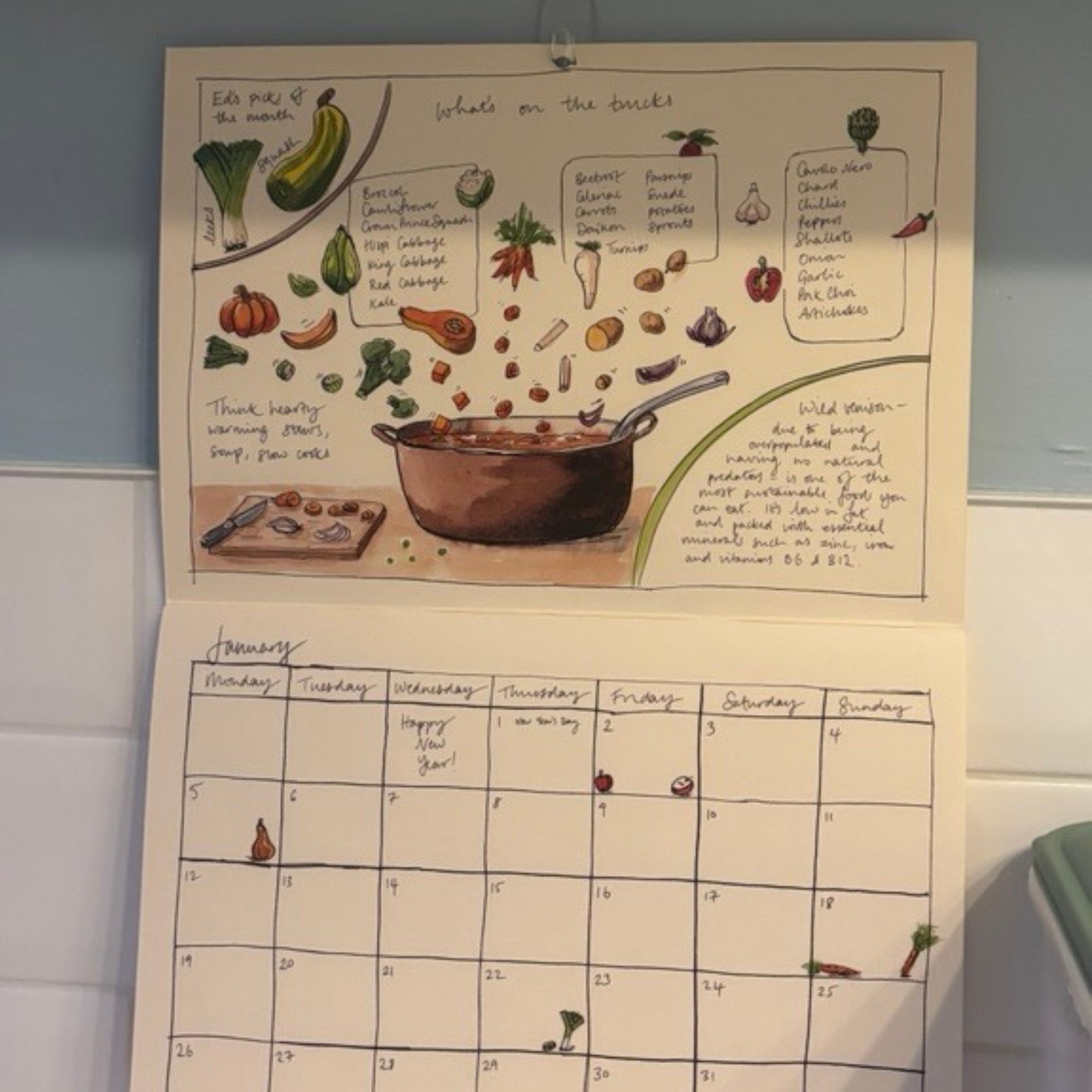
- Purchase a seasonal calendar for your kitchen, like this one from Sussex Peasant
- When eating out, choose restaurants which champion seasonality and sustainability, and remember to check the specials board
These small habits can add up to a meaningful difference over time.
A more sustainable future starts at the table
We often think sustainability requires major lifestyle changes, but sometimes the most effective actions are surprisingly simple.
As the late poet Wendall Berry wrote, “eating is an agricultural act”; eating seasonally connects us to the food we eat, the farmers who grow it, and the environment that sustains us. It encourages us to make choices that are good for our health, good for local communities, and good for the planet.
As climate change continues to affect the way food is grown across the world, supporting seasonal and local produce has become more than a lifestyle choice. It is an opportunity to strengthen our food system, reduce environmental impacts, and help ensure a sustainable future for generations to come.
So next time you’re planning your meals, take a moment to ask: What’s in season right now?
Your taste buds, your local farmers, and the planet will thank you for it.