What happens to food waste in Brighton & Hove? From new council collections to local community composting, discover how food waste can be turned into living soil that nourishes our city.
Brighton & Hove Food Partnership are supporting local people to waste less, eat better, save money, and do their bit for the planet.
More than half of the food thrown away in the UK comes from our own kitchens. We’re using the new food waste collection service as an opportunity to raise awareness of tips to reduce food waste and encourage locals to take up composting.
We believe the last step of reducing food waste is composting. Composting allows us to turn our leftover food scraps into something valuable and nourishing for people and the planet.
Brighton & Hove’s new Food Waste Collection service
The Council has recently started a weekly food waste collection service for households in Brighton & Hove. The new service is being introduced across the city in four phases. All areas should have collections from March 2026. Starter packs include a kitchen caddy, compostable liners, and either an outdoor caddy with an orange lid or access to a communal food waste bin. Information is being posted through letterboxes and is available online. We’ve been told that assisted collections will be provided to all residents who currently receive this service for their general bins.
Note: You can put all cooked and uncooked food into the bins, but not liquids or oil.
Find out more on the Council’s website.
Three reasons why community composting still matters
Local composting complements the Council’s food waste collections by building community, improving our city and doing our bit for the planet.
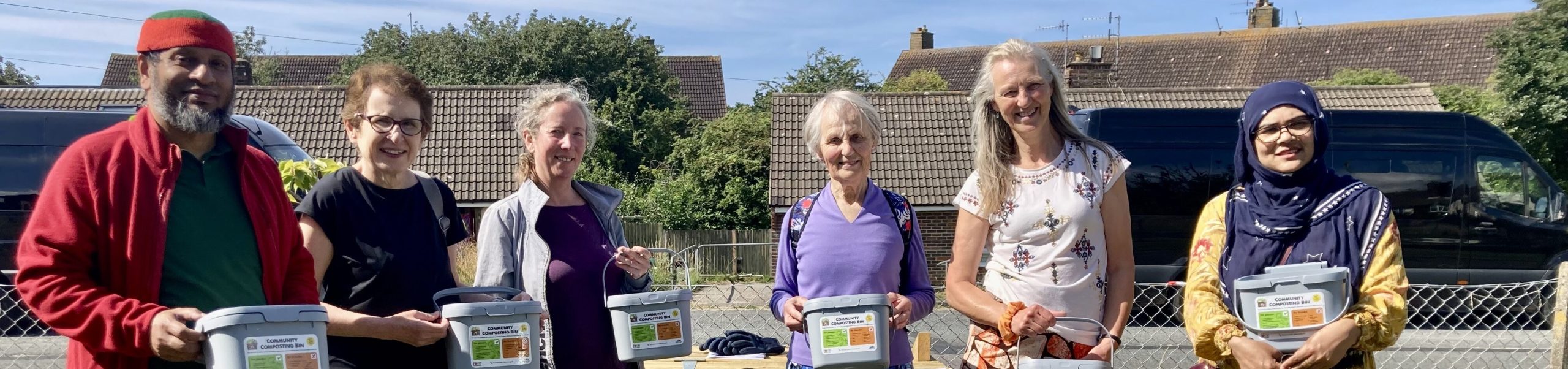
Through our Community Composting scheme, we’ve built a compost community of over 1000 households, who on a weekly basis continue to take their food scraps to local parks to be turned into compost. The stars of the show are the 100 individuals who volunteer every week to turn our compost to create living soil.
We’ve got more people outdoors and seen new connections and friendships form. Together, we’re improving the quality of the city’s soil, making our parks look nicer and supporting local wildlife. Plus, we’re doing our bit for the planet, by reducing the number of bin lorries transporting waste across Sussex.
Chris, volunteer: “My local park has had more birds visiting and the flowers have lasted into Autumn, since we’ve used our community compost here.”
1. We’re building community
Getting outside, connecting with local people and community groups has a positive impact on our mental wellbeing. Much local knowledge is shared at the compost boxes and many friendships have been made!
Feed your neighbours; many of our sites regularly donate their spare compost to local community gardens, school veggie patches and group allotments.
Sandy, volunteer: “I never thought composting would be the thing to get me out of the house. My highlight of the week is chatting to my neighbours whilst we turn compost. It’s also great that we’ve been able to make an impact on reducing climate change!”
2. We’re running on people power, not vehicles or machinery
Community Compost members typically walk their food scraps to their site (or travel short distances), ensuring the entire journey from kitchen to compost is local and low-carbon, avoiding emissions created by transport and industrial processing.
Our compost volunteers get a little workout turning the boxes, creating a fossil-fuel-free way to mix our compost.
3. We’re making compost that’s truly alive
Making living compost is a fundamental and sustainable way to create and maintain soil fertility. It feeds the plants, structures the soil, and sustains the life beneath the surface.
Look at the mature compost from home made or community sites, and you’ll notice a real difference from shop brought. Industrial processing seriously impacts the biodiversity within the compost, where as local compost is teaming with life.
When we nurture the soil, the soil nurtures us! Produce grown in healthy, vibrant soil offers both improved flavour and supports your gut microbiome.
Composting is part of our wider aim to reduce food waste
In addition to composting leftovers, we’re encouraging locals to cut down on food waste. For example, sharing ways to make the most of what’s in their fridge, including tips for keeping food fresh longer, helping others understand food labels. Find more tips here.
Mo, compost volunteer: “Being involved in community composting inspires me to shop differently, recycle more, and reduce my food waste, which saves me money.”
We welcome Brighton & Hove’s new food waste collection service as a great option for those unable to compost at home or at a community site. We will continue to champion community composting and ways to cut down on food waste.