A new version of the South Down National Park local plan has already been shaped by responses to the public consultation in March 2025. To read more about the background of the plan, you can read our previous blog from the last review.
But it is now up for another round of consultation, and this one will run until 23rd June 2026 and, at this important stage, the South Downs National Park Authority is asking for final comments before the plan is submitted for examination.
The plan sets out what the National Park Authority and partners across the South Downs National Park will deliver together from 2026 to 2031, with an overarching vision for 2060. This is the last chance for members of the public and people living within the South Downs National Park to have their say.
Greater recognition for Food and Farming
In terms of food, it was really encouraging to see how much more recognition food and farming has been given in this version of the plan compared to the last. We see this as a genuine step forward and something that reflects the growing conversations around local food systems across the South Downs.
In the previous draft there were only 10 mentions of food, and only 3 of those were contextually relevant or appropriately connected to farming and local food systems. This time there are 26 mentions throughout the document, with much stronger recognition of the role sustainable farming, regenerative agriculture, and local food production play within the National Park.
Two key questions were raised following the first draft of the plan, and it is encouraging to see that both have now been addressed.

How Does the Local Plan Ensure Sustainable, Locally Produced Food is Accessible to Local Communities?
In the previous draft there was very little mention of the infrastructure needed to support agriculture, something we have focused a great deal of our work on over the last two years, particularly local abattoir infrastructure. You can read more about the importance of abattoir infrastructure for local agriculture in The Local Meat Report.
This version now includes support for development that enables the long term viability of agriculture and associated businesses, where these are demonstrated to be necessary for the efficient functioning of an agricultural holding. While this is still broad, it is an important step forward in recognising the infrastructure needed to sustain local farming.
The plan has also kept the commitment around farm shops stocking local produce. Farms or nurseries will only be permitted to add a farm shop if at least 40% of the goods sold are produced on, or within 30 miles of, the holding. With a new addition, that another 40% of goods should come from Hampshire, Sussex, and Surrey.
The updated plan also now states that “allotments and community orchards can be used for healthy food growing”, recognising the importance of community scale food production. Opportunities for people to access spaces to grow their own food is something we care deeply about at the Food Partnership. Across Brighton and Hove there are already 45 community food growing projects, as highlighted in the city’s latest Food Strategy, showing the important role these spaces play in connecting people to food, nature, and their local communities.

How Will the Local Plan Support Regenerative Agriculture and Improve Soil Health?
Under Core Policy SD2, the previous draft did not include clear enough actions to improve soil health, only to conserve it. There was also no mention of regenerative agriculture as a means of improving soil health.
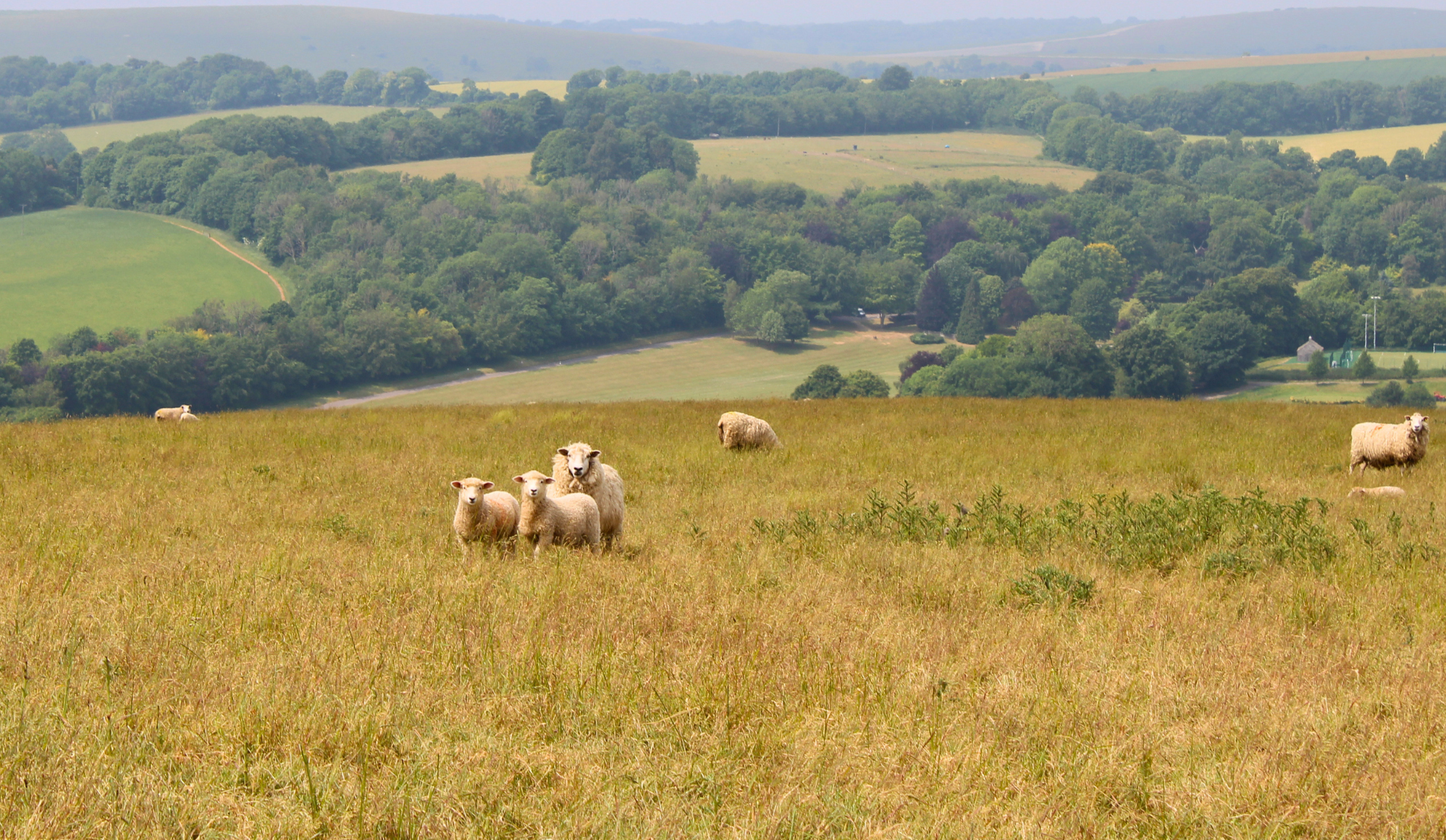
This updated version now includes references to supporting regenerative land management. Importantly, one of the five core principles of regenerative land management includes integrating livestock. You can read more about this in our blog series on conservation grazing.
The plan now acknowledges that regenerative agriculture aims to improve soil health, enhance biodiversity, and promote a more sustainable food system.
It also now references chalk grasslands, often described as Europe’s rainforest, which are found in patches across the South Downs. The plan recognises that scrub can often be overlooked as a food source for wildlife, but unmanaged scrub can rapidly take over and damage habitats such as chalk grassland.
Section 3.11, Spatial Portrait and Strategy: Our Approach to Development, builds on the concept of ecosystem services first introduced in the 2019 Local Plan, recognising natural assets such as the soils that provide our food. This is important because it explicitly links soil health and land management to food production, highlighting that healthy soils are the foundation of a resilient and productive agricultural system.
Policy SDC3: Regenerative Development and Ecosystem Services also supports “Regenerative agriculture and the sustainable production, distribution, and use of food, forestry and raw materials”. This shows a recognition of farming practices that are not only environmentally protective, but actively restorative, improving soil health, supporting biodiversity, which can also strengthen long term food system resilience across the National Park.
But what is still missing?
Despite growing concern about the imbalance of deer populations across the National Park, there is still no mention of clear, actionable strategies for managing these populations in a sustainable way that also provides food for local communities. Creating routes to market for venison is an important part of managing deer populations responsibly. For example, venison should be sold through newly opened farm shops and nurseries supported under the plan.
Similarly, while it is positive to see more recognition of infrastructure and businesses that support farming, there is still no specific mention of local abattoirs, particularly the remaining abattoir that sits within the South Downs National Park itself.
The growing recognition of regenerative agriculture and conservation grazing is important, but there also needs to be a viable route to market for livestock raised on this landscape with these methods. Supporting local processing infrastructure such as abattoirs and ensuring meat can be sold through local farm shops and businesses is essential if we are serious about keeping food as local as possible. If we lose this infrastructure, it will be very difficult to get back
Overall, this updated local plan represents real progress in recognising the importance of sustainable food systems, regenerative farming, and local food infrastructure within the South Downs National Park. But there is still more to do to ensure that the systems needed to support truly local food production are protected and strengthened for the future.
Have your say
One of the key objectives of the Local Plan is to “support green economic growth that enables regenerative land management, particularly farming and forestry, provides local employment, and supports the production and sale of sustainable food, drink and other products of the National Park.” While this ambition is welcome, the current draft is moving in the right direction and represents clear progress, but while we think this aim is great, we have suggested some more practical proposals to help meet this aim and make it a reality over the next five years. The Local Plan Review is your opportunity to help shape stronger policies that support food production, land stewardship, and more resilient local food economies.
For more information on how to respond, visit the Consultation Hub.
The deadline is approaching. The consultation closes on Friday 26th June, so please take the time to submit your feedback and make sure your voice is heard.